What's Actually Floating Around in Your Vape Juice? A Plain-English Breakdown of E-Liquid Ingredients

Photo: Lindsay Fox from Newport beach, United States, CC BY 2.0, via Wikimedia Commons
Pick up a bottle of vape juice and flip it around. You'll usually find a nicotine strength, a PG/VG ratio, and maybe a flavor description. What you won't find is much in the way of plain-language explanation about what any of that actually means for the person inhaling it.
For a lot of vapers — especially those who came from cigarettes and are still figuring out this whole ecosystem — that lack of transparency is frustrating. You're making a deliberate choice to move away from combustible tobacco, and it makes sense that you'd want to understand what you're putting in your body as part of that process.
So let's actually talk about it.
The Two-Part Base: PG and VG
Every e-liquid starts with a base, and that base is almost always some combination of two compounds: propylene glycol (PG) and vegetable glycerin (VG). These aren't mystery chemicals — both are widely used in food, pharmaceuticals, and cosmetics, and both have long safety records in those contexts.
Propylene glycol is a thin, nearly colorless liquid that's excellent at carrying flavor. It produces a noticeable throat hit — that slight sensation at the back of your throat that mimics the feel of a cigarette draw — which is why higher-PG juices tend to appeal to former smokers. The tradeoff is that PG produces relatively modest vapor.
Vegetable glycerin is thicker and slightly sweet on its own. It's responsible for the dense, visible clouds that define the sub-ohm and direct-lung vaping experience. High-VG juices tend to be smoother on the throat but can mute flavor slightly and are harder on coils because of their viscosity.
The ratio between these two is one of the most important pieces of information on a label. A 50/50 blend tends to be balanced — decent flavor, manageable clouds, noticeable throat hit — and works well in most pod systems and lower-wattage devices. A 70/30 or 80/20 VG/PG split is aimed at cloud production and smoother hits, typically used in higher-wattage setups. And a high-PG formula (sometimes labeled as a 60/40 or higher PG split) prioritizes throat hit and flavor clarity, making it a common choice for mouth-to-lung devices.
If you've ever switched juice brands and noticed your coils gunking up faster, a jump in VG content is often the culprit. Thicker juice doesn't wick as efficiently and leaves more residue behind.
Nicotine: More Nuance Than the Number on the Label Suggests
Nicotine strength is listed in either milligrams per milliliter (mg/mL) or as a percentage — these mean the same thing, so 6mg and 0.6% are identical.
But the type of nicotine matters just as much as the amount. Most e-liquids use one of two forms:
Freebase nicotine is the traditional form used in e-liquid since the early days of vaping. It's alkaline, which is what produces that harsher throat hit at higher concentrations. It absorbs into the bloodstream somewhat gradually and works well at lower nicotine levels in higher-wattage setups.
Nicotine salts (nic salts) are created by combining freebase nicotine with an acid — usually benzoic acid. The result is a compound that delivers nicotine much more efficiently and with significantly less harshness, even at higher concentrations like 25mg or 50mg. Nic salts became hugely popular with the rise of pod systems because they allow a satisfying hit at low wattage without the harsh throat sensation that would come from freebase nicotine at equivalent strengths.
If you've ever tried a high-nicotine freebase juice and found it uncomfortably harsh, nic salts are worth exploring. Conversely, if you're using a high-powered sub-ohm setup, nic salts at high concentrations can deliver more nicotine than you want — which is why most nic salt juices are designed for lower-wattage devices.
Flavorings: The Complicated Part
This is where things get less tidy, and where a lot of the legitimate questions about e-liquid safety live.
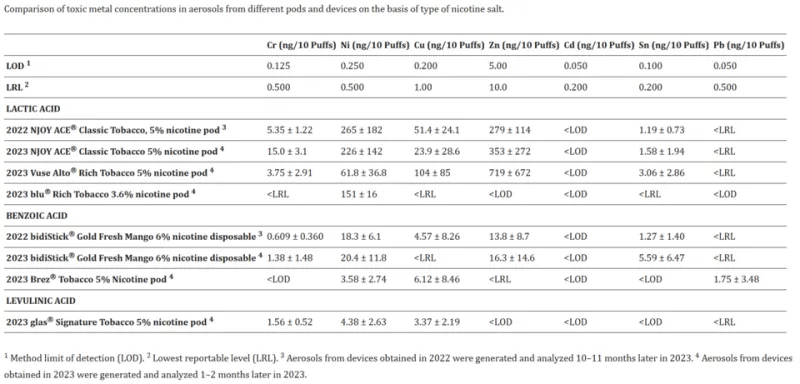
Flavoring in vape juice is typically a blend of food-grade flavoring compounds — the same kinds of ingredients used in candy, beverages, and baked goods. The key phrase there is food-grade, which means they've been tested and approved for consumption. It does not automatically mean they've been tested for inhalation, which is a meaningfully different thing.
Most reputable juice manufacturers use flavorings that have been evaluated in the context of vaping, not just eating. The industry has moved significantly away from certain compounds that raised concerns — most notably diacetyl, a buttery flavoring linked to a serious lung condition called bronchiolitis obliterans (sometimes called "popcorn lung") when inhaled in occupational settings. Responsible manufacturers now test for and avoid diacetyl and its close relatives, and many explicitly label their products as diacetyl-free.
When you're shopping for juice, it's worth checking whether a brand publishes third-party lab results or at least discloses their testing practices. This isn't always easy to find, but brands that prioritize transparency tend to make that information available on their websites.
What About "Natural" and "Organic" Labels?
Here's a myth worth addressing: natural doesn't automatically mean safer when it comes to inhalation. Plenty of natural compounds are irritating or harmful when heated and inhaled. Similarly, "organic" ingredients aren't inherently better in the context of vaping than their conventional counterparts.
These labels are often more marketing than meaningful health distinction. What actually matters is the specific compounds used, the quality controls during manufacturing, and whether independent testing has been conducted. Don't let buzzwords substitute for actual information.
Putting It Together When You Shop
Once you understand what you're looking at, label-reading becomes a lot more useful. Here's a quick practical cheat sheet:
- High PG (50% or more): Better flavor clarity, more throat hit, works well in pod systems and MTL devices
- High VG (70% or more): Smoother hit, bigger clouds, designed for sub-ohm and direct-lung setups
- Freebase nicotine: Best at lower mg levels (3–12mg) in higher-wattage devices
- Nic salts: Best at higher concentrations (20–50mg) in lower-wattage pod systems
- Third-party lab tested: Worth prioritizing, especially for flavoring transparency
Vaping as a smarter alternative to smoking is a choice that deserves to be made with real information. Understanding what's in your juice doesn't require a chemistry degree — it just requires someone to explain it straight. Now you've got the basics. Use them.