Breathing Easy: What the Research Really Tells Us About Secondhand Vapor
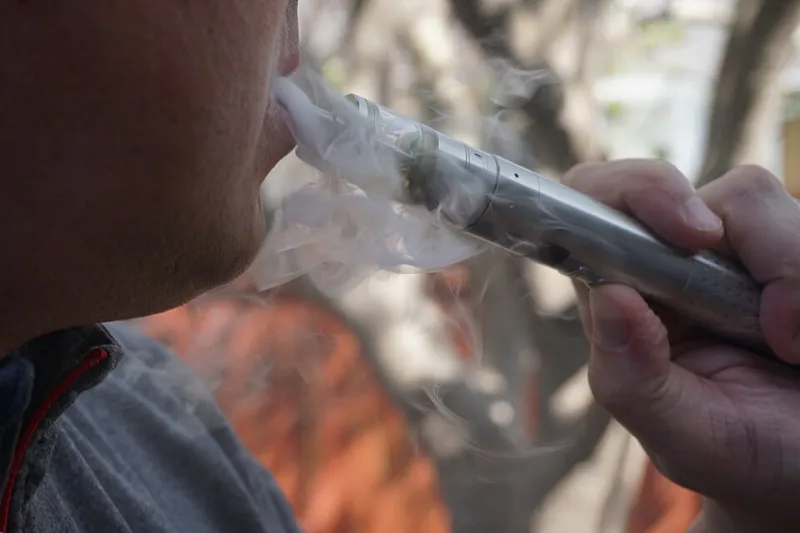
Photo: Vaper City, CC BY-SA 4.0, via Wikimedia Commons
If you vape around family or friends, you've probably felt the side-eye. Maybe someone's asked you to step outside, or a well-meaning relative forwarded you a scary headline about "toxic clouds." The concern is understandable — secondhand cigarette smoke has a genuinely horrifying track record, and it's natural to assume vapor follows the same rules.
But does it? The science is more nuanced than the headlines suggest, and if you're a smoker who switched to vaping partly out of consideration for the people around you, the research is worth knowing.
First, a Quick Primer on What Secondhand Smoke Actually Is
To understand the secondhand vapor debate, it helps to understand why cigarette smoke is so harmful in the first place. When tobacco burns, it produces combustion byproducts — carbon monoxide, tar, benzene, formaldehyde, and roughly 7,000 other chemicals, at least 70 of which are known carcinogens. Secondhand smoke isn't just an annoyance; it's a documented cause of lung cancer, heart disease, and respiratory illness in non-smokers, including children.
Vaping doesn't involve combustion. An e-cigarette heats a liquid — typically a blend of propylene glycol, vegetable glycerin, flavorings, and nicotine — to create an aerosol. No burning, no tar, no carbon monoxide. That fundamental difference is where the secondhand story starts to diverge from what you've probably heard.
What Studies Have Actually Found in Exhaled Vapor
Researchers have spent the better part of a decade measuring what's in exhaled e-cigarette aerosol, and the results are consistently less alarming than the coverage would imply.
A widely cited study published in the journal Tobacco Control found that the concentrations of toxic compounds in secondhand vapor were dramatically lower than in secondhand smoke — in some cases, 9 to 450 times lower depending on the compound. Nicotine was detectable in exhaled vapor, but at levels far below occupational safety thresholds.
Public Health England — the UK's equivalent of the CDC — has repeatedly concluded in its evidence reviews that vaping poses "no identified health risks" to bystanders in most realistic scenarios. Their most recent assessments note that while vapor isn't literally "just water," the harmful components are present at such trace levels that the practical risk to non-vapers is negligible compared to tobacco smoke.
A 2017 study out of San Diego State University specifically examined indoor air quality in homes where e-cigarettes were used. Researchers found that fine particle levels rose during vaping sessions but returned to baseline quickly — far faster than the lingering particulate matter associated with cigarette smoke, which can coat surfaces and persist for hours.
The "Aerosol, Not Smoke" Distinction Matters More Than You Think
One of the more persistent sources of confusion is the word "vapor." Technically, what e-cigarettes produce is an aerosol — tiny liquid droplets suspended in air — rather than true water vapor. Critics sometimes use this distinction to imply that the terminology is misleading and that aerosol is inherently more dangerous.
But the composition of that aerosol is the point. The aerosol from a vape device doesn't carry the combustion byproducts that make tobacco smoke so destructive. Studies measuring PM2.5 (fine particulate matter, the stuff that gets deep into lungs) show that vaping does elevate indoor particle counts temporarily, but the particles are primarily the glycerin and propylene glycol droplets from the e-liquid — substances that have decades of safety data behind them from their use in food, pharmaceuticals, and theatrical fog machines.
Formaldehyde sometimes comes up in secondhand vapor discussions, and it's worth addressing directly. Yes, formaldehyde can be produced when e-liquid is heated — but primarily under "dry burn" conditions where there's little to no liquid remaining on the coil. Under normal vaping conditions, formaldehyde levels in exhaled aerosol have been measured at or near ambient indoor air levels. The scary formaldehyde studies that made headlines were largely conducted at unrealistically high wattages that no actual vaper would use.
What We Don't Know (And Why Honesty Matters)
Being straight with you: the long-term data on secondhand vapor exposure simply doesn't exist yet. Vaping as a mainstream activity is only about 15 years old in the US, and the research base, while growing, can't yet speak to decade-long cumulative effects the way cigarette research can.
It's also worth noting that not all vaping products are created equal. Some flavoring compounds — diacetyl being the most discussed — have raised legitimate concerns in occupational exposure contexts, though concentrations in exhaled aerosol are far below those thresholds. Choosing reputable e-liquid brands that test their products and disclose ingredients matters here.
The responsible takeaway isn't "vaping around others is totally fine, no questions asked." It's that the available evidence suggests secondhand vapor presents a significantly lower risk profile than secondhand smoke — and that the two should not be treated as equivalent by policymakers, landlords, or your mom.
Practical Takeaways for Considerate Vapers
Even if the science is reassuring, social awareness still matters. Here's how to be a considerate vaper without abandoning the habit that's working for you:
- Ventilate. Cracking a window or vaping near an air exchange dramatically reduces any aerosol buildup in a shared space.
- Read the room. Around kids, pregnant women, or people with respiratory conditions like asthma, extra caution is just good manners — even if the risk is low.
- Don't blow clouds at people. This should go without saying, but directing exhaled vapor toward someone's face isn't just rude, it's the scenario most likely to result in any measurable exposure.
- Know the rules. Many states and municipalities have extended no-smoking policies to include vaping in public spaces. Respecting those rules — even when you think they're scientifically overcautious — keeps the vaping community in good standing.
Switching from cigarettes to vaping was, for many people, partly an act of consideration for the people they love. The science, imperfect and still developing as it is, suggests that instinct was pointing in the right direction.