Pack Smart, Vape Happy: The Complete Guide to Flying and Road-Tripping with Your Gear

Photo: person packing vape device into carry-on luggage at airport, via img.freepik.com
So you've got a trip coming up — maybe a flight to visit family, a work conference, or a road trip down the coast. You've got your vape setup dialed in just right, and the last thing you want is to show up at your destination without it. Or worse, have it confiscated at a TSA checkpoint because you didn't know the rules.
Good news: traveling with vaping gear is totally doable. It just takes a little prep. Here's the full rundown so you can move through airports and state lines without sweating it.
What TSA Actually Says About Vapes
Let's start with the basics. The TSA has pretty clear guidelines on vaping devices, and the core rule is simple: e-cigarettes and vaporizers must go in your carry-on bag or on your person — never in checked luggage.
This isn't a suggestion. It's a federal rule tied to lithium battery safety. Lithium batteries in the cargo hold are a fire risk without someone nearby to monitor them, so the FAA prohibits it entirely. If your mod, pod system, or disposable gets discovered in a checked bag, it will be removed. No exceptions.
Here's a quick breakdown:
Carry-on: YES
- Vape devices (mods, pod systems, disposables)
- Extra batteries (in a battery case)
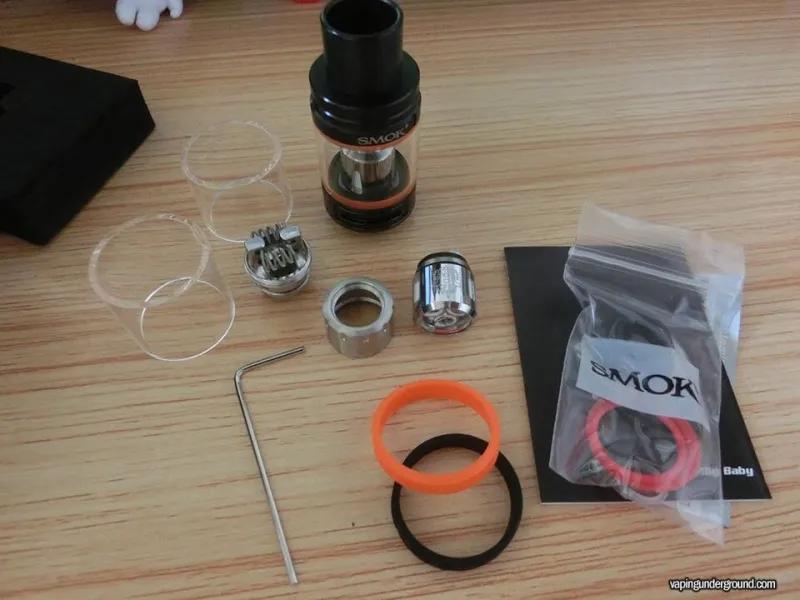
- Empty tanks and atomizers
- Vape juice (subject to the 3-1-1 liquid rule)
Checked bag: YES
- Unopened bottles of e-liquid over 3.4 oz
- Coils, wicks, and other accessories
- Charging cables and adapters
Checked bag: NO
- Any device with a lithium battery
- Spare lithium batteries
For liquids in your carry-on, the standard TSA 3-1-1 rule applies: each container must be 3.4 oz (100ml) or less, all containers must fit in one quart-sized clear bag, and you're limited to one bag. Most standard e-liquid bottles are 30ml or 60ml, so they'll slide right through — just make sure they're in your liquids bag.
Real Scenario: What Happens at the Checkpoint
Picture this: you're at security, laptop out, shoes off, and your bag goes through the X-ray. The agent flags it. Why? Your mod is sitting next to a bulky battery pack and some charging cables, and the whole thing looks like a tangled mess on screen.
The agent pulls your bag, takes a look, and everything's fine — but you've held up the line and added five minutes of stress to your morning.
Lesson: keep your vape gear organized and easy to identify. Pull your device out of your bag like you would a laptop if you have a larger mod. Put your batteries in a labeled plastic case. Keep your juice bottles in your liquids bag. The easier it is for agents to see what they're looking at, the faster you move through.
Also, don't vape in airports. Not in bathrooms, not near exits, not "just a quick puff" outside the secure area before you go back in. Airports take this seriously, and the fines aren't worth it.
State Laws: The Part Most Vapers Skip
Here's where things get genuinely complicated. The federal TSA rules are consistent, but once you land or cross a state line, you're subject to whatever laws that state has on the books — and they vary a lot.
A few things to know before you go:
Flavor bans: Several states have enacted restrictions on flavored e-liquids. Massachusetts, for example, has a full ban on flavored tobacco products including vape juice. If you're flying into Boston with a bag full of fruit and dessert flavors, you could technically be in violation of state law. California has had ongoing flavor-related legislation as well.
Age verification and purchase rules: All states require you to be 21 to purchase vaping products (thanks to the federal Tobacco 21 law), but some states layer additional restrictions on top of that.
Where you can vape: Many states treat vaping the same as smoking under their clean indoor air laws, meaning no vaping in restaurants, bars, workplaces, or public spaces. Others have more lenient rules. Know before you go.
Online purchase and shipping restrictions: If you're planning to order juice to your hotel or a friend's house in another state, check whether that state allows direct-to-consumer shipping of vape products. Some don't.
A quick Google search for "[state name] vaping laws 2024" will pull up current info. It's worth five minutes before your trip.
Road Trip Considerations
Driving gives you more flexibility — no TSA, no carry-on limits. But you're still crossing state lines, and the same legal variations apply.
A few practical tips for road trips:
- Keep your gear accessible but not distracting. Don't vape while driving in a way that impairs your vision or attention. Some states treat vaping while driving similarly to distracted driving.
- Store juice out of direct sunlight. Heat and UV light degrade e-liquid faster. Keep bottles in a bag or the glove compartment rather than on the dashboard.
- Check the laws for every state you're passing through, especially if you're hauling a significant amount of product. It's unlikely anyone's going to pull you over for a bottle of vape juice, but if you're in a state with flavor bans and you get stopped for something unrelated, you don't want extra complications.
Packing Tips to Keep Everything Intact
Beyond the legal stuff, there's the practical matter of arriving with your gear in one piece.
- Empty your tank before flying. Cabin pressure changes can cause tanks to leak, and nobody wants vape juice soaking their clothes or bag lining. Seriously — empty it every time.
- Store batteries safely. Loose batteries rattling around in a bag are a fire hazard. Use a hard-shell battery case. They're cheap and they prevent shorts.
- Bring backup coils. Coils have a habit of dying at the worst possible moment, and finding your specific coil type in an unfamiliar city is a pain. Pack two or three extras.
- Consider a travel-friendly setup. If you're usually running a large box mod, it might be worth throwing a compact pod system in your bag for the trip. Less bulk, less hassle.
The Bottom Line
Traveling with your vape gear isn't complicated once you know the rules. Keep devices in your carry-on, follow the liquids rule, do a quick check on your destination state's regulations, and pack smart. A little prep goes a long way toward making sure your trip starts — and ends — on the right note.